Concrete Vibrator
Concrete vibrator is a mechanical device used for compaction of Fresh concrete. Concrete contains particles of different sizes. There are chances of air void or less compaction in concrete, hence concrete vibrators are used to compact concrete and remove air voids in fresh concrete. These can be operated from Diesel, Petrol or from Electricity. Frequencies of vibration vary from 2800 to 15000 rpm. Vibrator helps to compact concrete, remove air voids, helps to reduce honeycombs in concrete and ultimately helps to achieve strength. Vibrator should not be used for long time while concreting as it may lead to bleeding and segregation.
Types of Concrete Vibrator
Different types of concrete vibrators are used in concrete compaction for different construction and structural requirements.
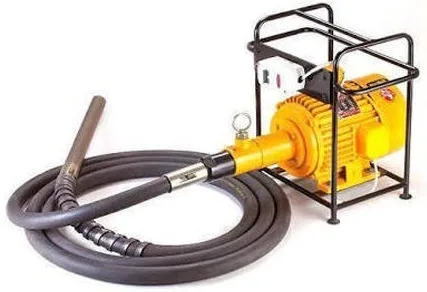
- Immersion or Needle Vibrator: This is the most common vibrator used on site. It has Needle or Steel Tube at the end. Steel tube is connected to machine using flexible pipe. This steel tube (Needle) is generally inserted in fresh concrete for vibration. Needle diameter varies from 25mm to 90mm. For slab compaction it should be minimum 25mm and for bridges or Dam maximum size is 90mm. For column needle size should be 40mm to 60mm.
The frequency of vibration from vibrator machine varies up to 15000 rpm. However a range between 3000 to 6000 rpm is suggested as a desirable minimum with an acceleration of 4g to 10g. Vibrator should be kept for 5 to 20 seconds. If used for longer time then segregation or bleeding may start. These vibrators are portable and easy to use on site. The cost of these vibrators is also less compared with others.
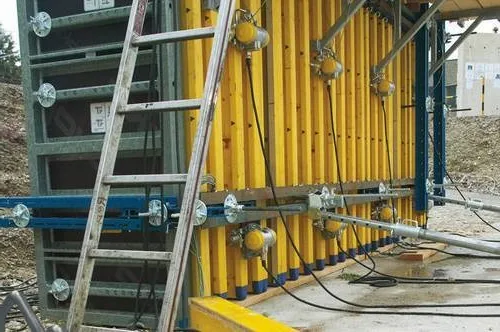
- External or Formwork Vibrator: These Vibrators are clamped to formwork externally at predetermined points. That is why it is called as external or formwork Vibrator. They operate at a frequency of 3000 to 9000 rpm at an acceleration of 4g. These vibrators consume more power than Needle vibrator. This type of vibrator is most commonly used in precast items and thin wall items.
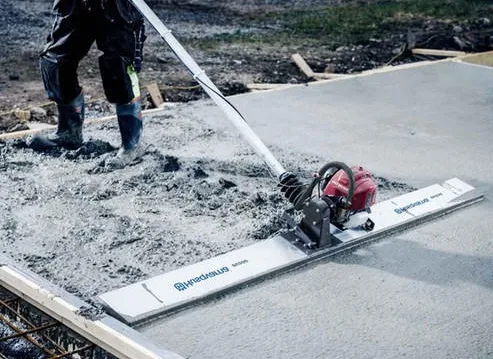
- Surface Vibrator or Screed Vibrator: They are also called pan vibrators. They are clamped to the screed. They vibrate the concrete from the surface while screeding of the concrete is carried out. They are effective only if the depth of concrete is up to 20 cm. If the depth is more they can be used in combination with internal vibrators. They are used for long horizontal surfaces such as pavements and slabs. It can be used in Concrete road work.
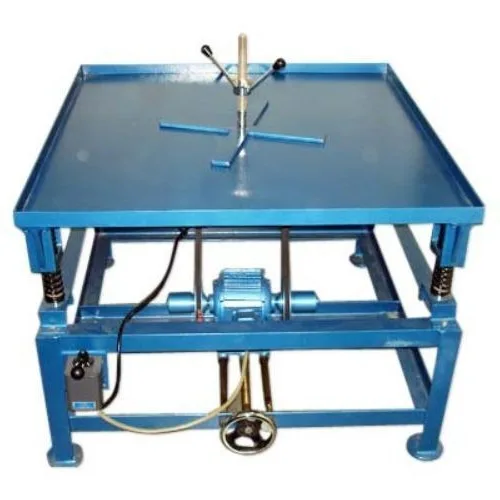
- Vibrating Table: These are rigid metal platforms driven through electricity. Platform is mounted on flexible spring to support vibration. The normal frequency of vibration is 4000 rpm. The vibrating tables are very efficient and easy in compacting stiff and harsh concrete mixes required for manufacture of precast elements in the factories and test specimens in laboratories.