
What is Building Plinth?
A plinth of the building is a level where substructure ends and superstructure starts. The plinth distinguishes substructure and superstructure. The plinth is the bottom-most part of the building superstructure and it is above ground. The plinth is above ground as per the building Bye-Laws.
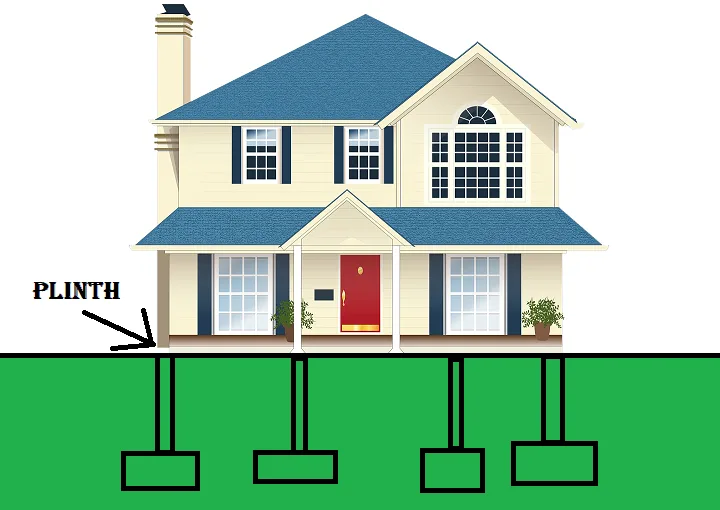

Column up to plinth
Generally, Plinth does not rest directly on footings. The plinth beam and footings are connected through columns. The weight of the plinth is transferred to the footing through Columns. The height of the Column varies as per the depth of the footing. If the depth is more than 2.4 meter then consult Consultant for the design change or verification. Sometimes tie beams are used if the height of the column is very high.
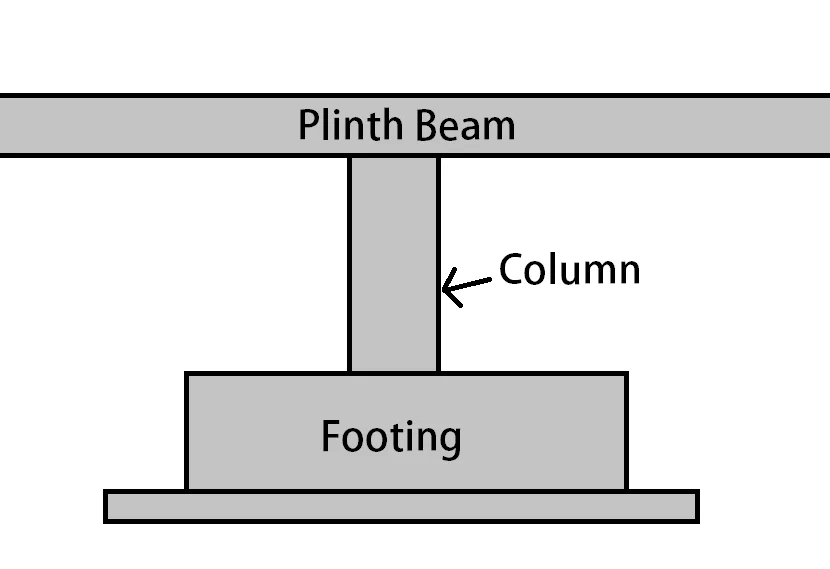
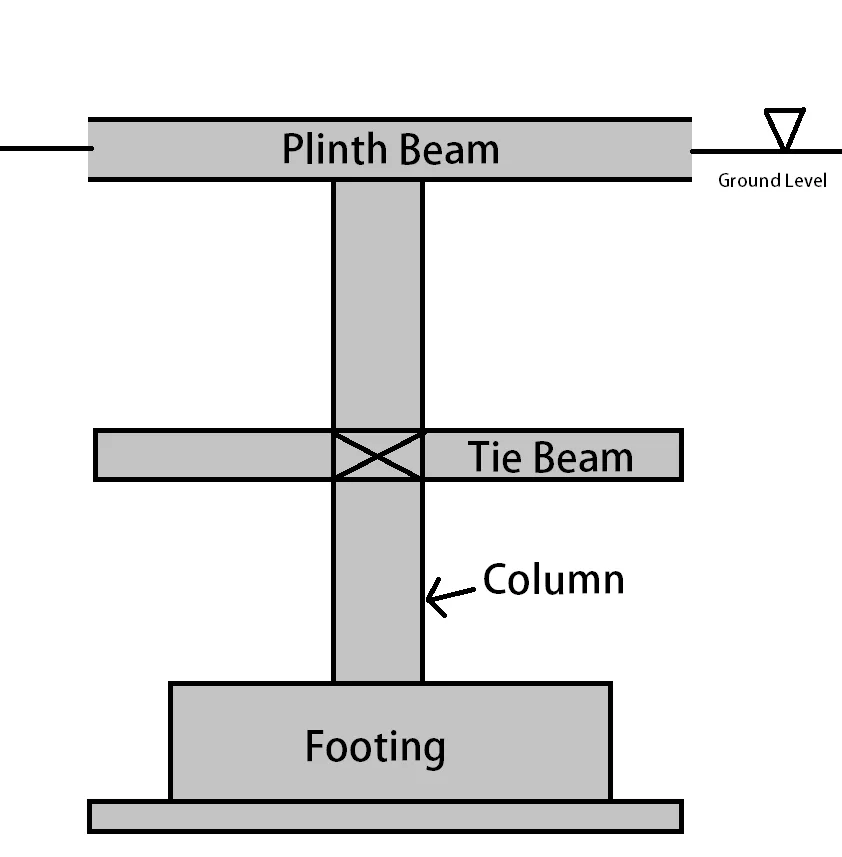
Tie beam and Plinth Beam
Tie beam and Plinth beam are different from each other. Both beams are RCC structures. Tie Beam is a beam used to connect columns if the height of the columns is very high. It can be constructed for some external supports as well. In plinth case, tie beams are generally below ground and it lies in between plinth beam and footings. Plinth Beams are tie beams which are constructed at plinth level. If you construct a tie beam at plinth level then it will be called as a Plinth Beam. Plinth beam takes the load of walls or any structure built on the plinth area and transfers it to columns. Columns transfer these loads to the footings.
Backfilling and Compaction
The Backfilling is the process of refilling the excavated place for the foundation and plinth work. Excavation is the process of removing the material for foundation construction. After the completion of foundation work, we have to refill the excavated area. The material used for the refilling should not be black cotton soil type material. Use murrum or stone-like material for mass refilling.
Compaction is the process to compact refilled material with tools like machines or hand equipment. Backfilling should be carried out in layers if the height of the backfilling is more. Compaction should be done after every layer filling. Backfilling soil should not be excessively wet. If it is wet then let it dry first. Wet soil may change the volume which may lead to plinth failure.
P.C.C. and Protection
After compaction, P.C.C. should be done. P.C.C. helps to protect the plinth area from erosion. The thickness of the P.C.C. should be more than 100mm. Curing should be done for at least 14 days after the casting. Curing helps to reduce the effects of the heat of hydration. Pest control of plinth is a process to keep different insects away from your structure. Pest control can be carried out before casting of the plinth. Tiling or trimix can be done after P.C.C. work as per the requirements.