
What is Excavation?
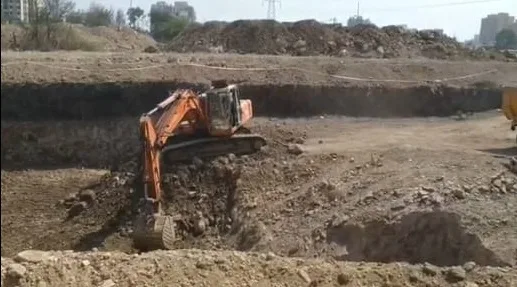
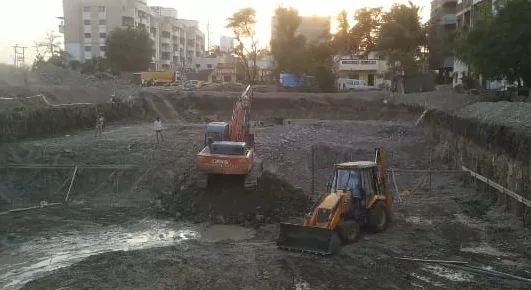
Excavation is a preliminary work in the building construction. Excavation is the process of removing earth, soil, hard or soft strata to complete the desired work. Excavation can be done using tools, Machines, equipment or sometimes explosives.

Excavation quantities on site
Construction Calculator A1 includes excavation among its 80+ calculators and works fully offline, in metric and imperial.
Try the app
The need for Excavation
Excavation is needed for many types of work, some examples are as given below,
- Foundation of Building
- Plinth work for masonry or for beam
- Basement work of building
- UGWT (Underground water tank work) and septic tank
- Drainage line, water line or electric line work
- Compound wall or gate foundation
- Earthing work pit etc
Requirements to excavations
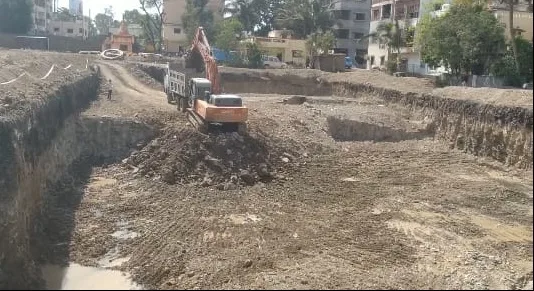
Excavation is a mass process, there are many things that should be checked before the actual starting of excavation. Here are some points you should check before starting the excavation,
- Trial pit for strata checks– The trial pit is taken to understand how deep we need to go for hard strata. Trial pit is a small pit excavated till the hard strata depth. It helps us to calculate how deep hard strata is and how much earth material we will need to remove. The stability of the building depends upon the hard strata. So strata check is very important. We must approve strata from a testing lab or appointed consultants.
- Availability of Drawings- Centerline drawing, Building Block Drawing, and excavation drawings are required before the starting of excavation. These drawings will help you to mark actual blocks of excavation. Marking block with lime powder will help in fast work and cost-cutting.
- Machines, tools, and material- Machines and tools are required for excavation as it is a mass process. Excavation requires tools like Pickaxe, spade, mortar pans, chisels, hammer, line dori, etc. In big excavation, types of machinery are needed. Some of the machines are bulldozer, Excavator, Tractor, Drills and water pumps.
- Labors- Many types of manual work are also required for the excavation. Labors are required for such work. Check your quantum of work and arrange labors accordingly.
- A place to transport excavated material- First estimate the quantity of material you need to excavate. Then decide whether enough place is available or not at the construction site to store the material. If enough place is not there then arrange a place nearby so that at the time of refilling you can get the material back soon.
- Local authority permissions- In some cases local authority approvals are required to excavate the material. Check if you need permission or not. If permission is needed then make sure you take necessary approvals.
Execution of Excavation
Once you have done the preparation for the excavation work then some points are there to check at the time of excavation. Here are some points you need to know at the time of excavation,
- Strata approval- You must check whether all required approvals are ready or not, then start the excavation work.
- Clearing the site- Clear all the bushes, small plants or loose things so that you can mark the lines.
- Setting out the excavation line- Draw excavation line with the help of lime powder or phakki. It will help you to mark the exact excavation area.
- Benchmark marking- Benchmark is needed so that you don’t miss any point in the building. Mark at least 2 to 4 benchmarks on permanent structures.
- Starting excavation- Start the actual excavation work with help of machinery or labors whichever is needed according to the work quantity.
- Removing excavated material- Once you have reached the desired strata, remove excavated material and stock at the place decided by you.
- Dressing- Make a dressing of the excavated pits for the P.C.C. work. A dressing will help to understand whether you can stop excavation or not.
- Dewatering- Sometimes dewatering is needed. If you don’t do dewatering you will not be able to find whether you have reached the desired strata or not.
- Approve Strata- Approve strata from time to time from the appointed consultants. If consultants approve then you can go for further work.
- Seal site for safety- Make sure you seal the boundary of the excavated area. If the boundary is not sealed or highlighted then anyone can fall in the pits. Take care to avoid such mishaps.