
Objective & Significance
Water Absorption test on brick is conducted to determine the moisture absorbed by the brick when subjected to extreme conditions like rain. The absorption test can be used as an indicator of the durability properties of the brick such as quality, degree of burning, and behavior of brick in weathering.

Aim
To determine the water absorption of brick.
Apparatus
a) Dry bricks: A specimen to check its water absorption
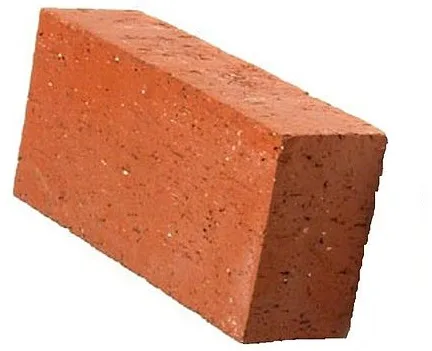
b) Weighing machine: To check dry and Wet weight of Brick

c) A Ventilated Oven: To dry Brick Before testing
Theory
Bricks for external use must be capable of preventing rain water from passing through them to the inside of walls of reasonable thickness. A good brick should absorb water maximum 1/7 th of the weight of the brick.
Procedure
- 10 bricks are taken randomly from a stack.
- The bricks are put in an oven at a temperature of 105–115 °C until they reach a constant mass.
- Bricks are weighed in a digital weighing machine and the weight is recorded as W1.
- The bricks are immersed in water at room temperature for 24 hours.
- After 24 hours immersion, the bricks are taken out of water and wiped with a damp cloth to remove surface water.
- The bricks are weighed again within 3 minutes of being taken out of the water, and the weight is recorded as W2.
- Calculate the water absorption of the brick.
Conclusion/Result
Water absorption (%) = (W2 − W1) ÷ W1 × 100
W1: dry weight; W2: wet weight