
Tensile Strength of concrete
It is the ability of concrete to resist tensile stress applied on it. Concrete is a good performer in terms of compression, but significantly weak in tension force. This is the reason reinforcement is provided to balance weakness of concrete in tensile strength. Split cylinder test can be used to find out the tensile strength of concrete. Tensile strength is around 10% – 12% of its compressive strength.

Factors Affecting Tensile Strength of concrete
- Quality of raw material
- W/C Ratio (water Cement Ratio)
- Age of concrete
- Mix design of concrete
- Temperature
- Humidity
- Curing
Significance and Use
- Splitting tensile strength is generally greater than direct tensile strength and lower than flexural strength.
- Splitting tensile strength is used in the design of structural lightweight concrete members to evaluate the shear resistance provided by concrete and to determine the development length of reinforcement.
Apparatus
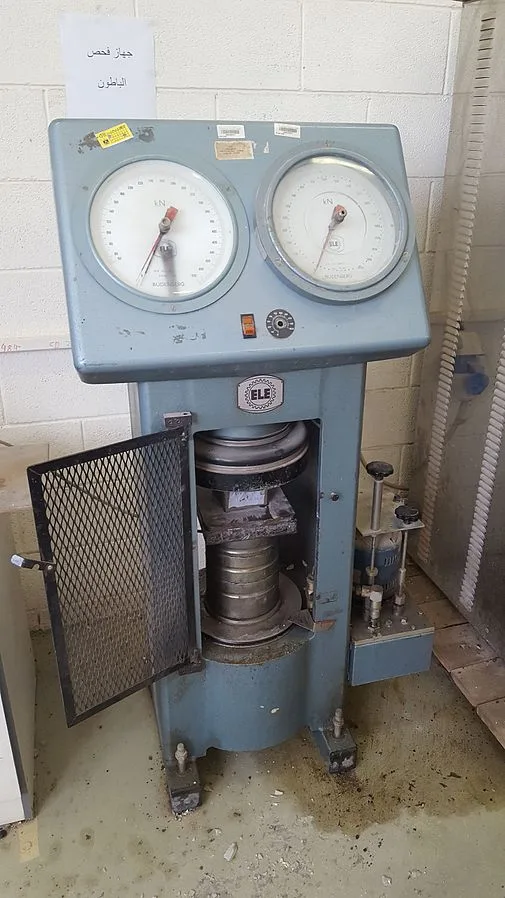
- Testing Machine: It should be capable of applying the load at a rate of 1.2 MPa/min to 2.4 MPa/min.
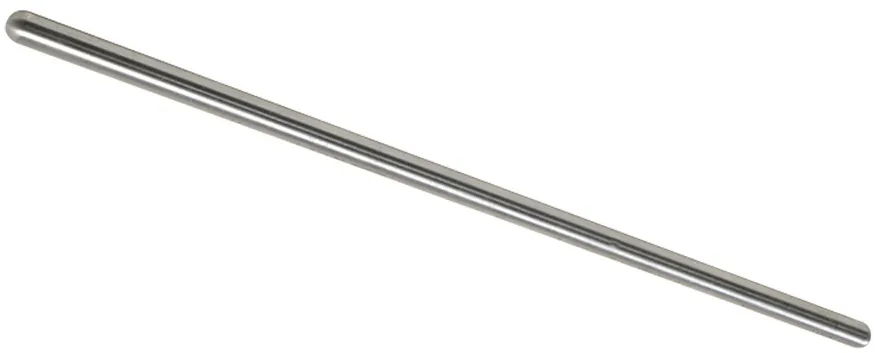
- Tamping Rod: For Compaction of concrete. 16mm in diameter and 600mm in length.
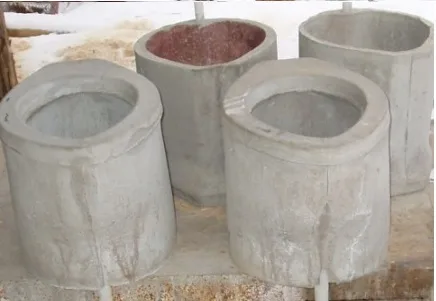
- Concrete Mould: Cylindrical steel made.
- Trowel: for concrete work.
Split Cylinder Test Procedure
Sample Preparation: Pour good-quality concrete into the mould. It should be cast in 3 layers. Compact concrete well using compaction rod. Keep the top surface of the concrete smooth.
Curing: Cure the concrete specimen well for 7-28 days as per requirement of the specimen.
Measure the dimensions of the specimen well. Note them down.
Keep the specimen in the testing machine and start applying the load. The loading rate must be between 1.2 MPa/min and 2.4 MPa/min.
Record the maximum applied load at which specimen fails.
Calculations
T = 2P / (π × L × D)
Where, T = splitting tensile strength [MPa], P = maximum applied load indicated by the testing machine [N], L = length [mm], and
D = diameter [mm]