
Objective and Significance
Sieve Analysis is a basic essential test for all aggregate technicians. The sieve analysis determines the gradation in order to determine compliance with design, production control requirements, and verification specifications. The gradation data may be used to calculate relationships between various aggregate or aggregate blends, to check compliance with such blends, and to predict trends during production by plotting gradation curves graphically, to name just a few uses. Used in conjunction with other tests, the sieve analysis is a very good quality control and quality acceptance tool.

Aim
To calculate and analyze particle size distribution of fine and coarse aggregates by sieve analysis
Apparatus
A set of sieves: mounted on suitable frames, designed not to leak. Sizes – 80mm, 63mm, 50mm, 40mm, 31.5mm, 25mm, 20mm, 16mm, 12.5mm, 10mm, 6.3mm, 4.75mm, 3.35mm, 2.36mm, 1.18mm, 600µm, 300µm, 150µm and 75µm
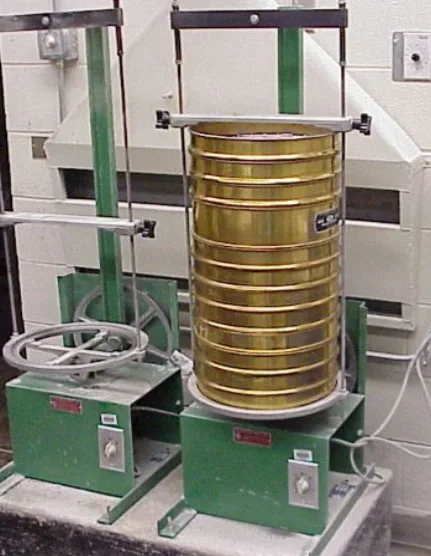
Weight Scale: Balance or scale readable and accurate to 0.1 percent of the weight of the test sample
Sample
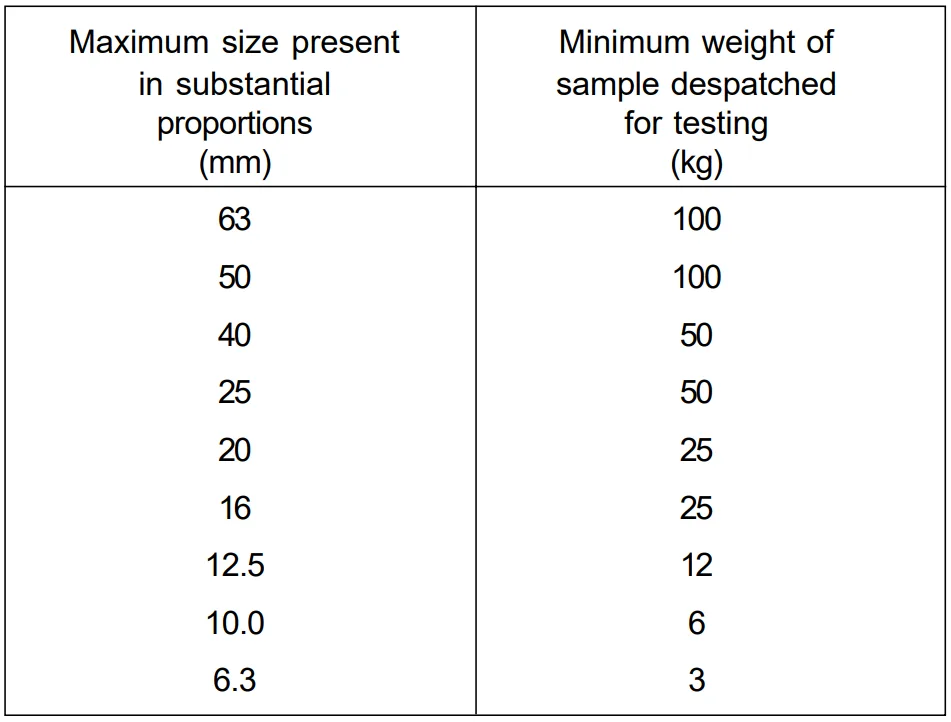
The minimum weight of sample despatched for testing depends on the maximum size of aggregate present in substantial proportions, as given in the table below.
Procedure
- The test sample is dried to a constant weight at a temperature of 110 ± 5 °C and weighed.
- The sample is sieved by using a set of Sieves.
- On completion of sieving, the material on each sieve is weighed.
- Cumulative weight passing through each sieve is calculated as a percentage of the total sample weight.
- Fineness modulus is obtained by adding the cumulative percentages of aggregates retained on the standard sieves (80 mm, 40 mm, 20 mm, 10 mm, 4.75 mm, 2.36 mm, 1.18 mm, 600 µm, 300 µm and 150 µm) and dividing the sum by 100.
Result and Calculations
- the cumulative percentage by weight of the total sample passing each of the sieves, to the nearest whole number; or
- the percentage by weight of the total sample passing through one sieve and retained on the next smaller sieve, to the nearest 0.1 percent