
Kelly Ball Penetration Test
It's a test performed to find out workability of fresh concrete. It is also called as ball penetration test. It is an alternative for slump cone test. It is easy to perform and not a complex test. The workability is decided by the depth of the penetration of metal hemisphere which will penetrate under its own weight into the fresh concrete. The Metal ball has 152 mm diameter and 13.6 kg weight. J. W. Kelly (Professor, University of California) had devised the plan of the Kelly ball test apparatus. If large coarse aggregates are used then this test might fail.

Concrete quantities on site
Construction Calculator A1 works out concrete volume and mix quantities offline, in metric or imperial, with PDF export.
Try the app
Apparatus
Kelly Ball Test Apparatus: It has a handle, a hemisphere, graduated scale and a frame to support all these things.
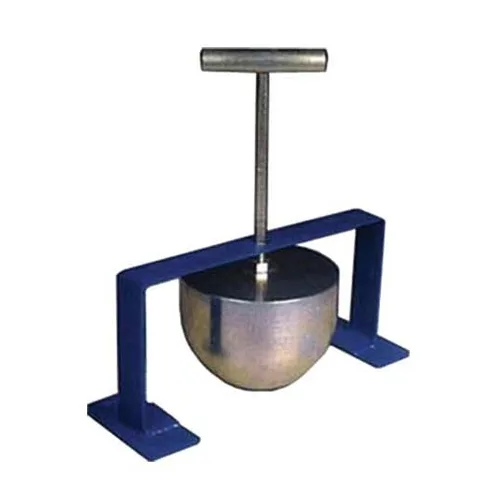
Procedure
- Take sufficient amount of concrete in a container. Depth of concrete in the container should be minimum 200mm.
- Level the concrete. Keep the apparatus on concrete. The ball should be minimum 230mm from the edge of the container. Frame of the Kelly ball apparatus must rest on the concrete surface.
- Now slowly release the ball and let it penetrate in concrete.
- Note down the reading on scale. Repeat this at least 3 times to average the workability
Result
Workability is average of min 3 repeat tests