
When Water is mixed in cement it starts a chemical reaction. Then hydration process starts and makes a cement paste. This paste can be moulded in any shape until it hardens. Cement continues to react with water and slowly starts losing its plasticity and ultimately hardens. Time taken to harden the cement after mixing water into it is called as setting time of cement.
Initial setting Time
Time taken between Water mixed with cement to the time when Cement paste starts losing its plasticity. For ordinary portland cement, this time should not be less than 30 minutes.

Final Setting Time
Time taken between Water mixed with cement to the time when Cement paste has completely lost its plasticity. For ordinary portland cement, this time should not be more than 600 minutes or 10 hours.
Significance
- Initial setting time helps to find the maximum time available to place concrete in the desired location.
- Final setting time helps to find out time for deshuttering of formwork or stripping time of formwork.
- Concrete should not be disturbed after the Initial setting time of cement is reached.
- Concrete transportation, curing, placing time are dependent on the Setting time of the Cement.
Factors Affecting Setting Time
- The fineness of the cement. Finer cement starts hydration faster.
- Atmospheric temperature. Low Temperature slows down the hydration process and hot temperature speeds it up.
- Humidity in weather directly impacts the setting time of cement.
- Chemical composition in sand and aggregates also impacts the setting time of cement.
- Quality of water.
Apparatus Required in Cement Setting time Testing
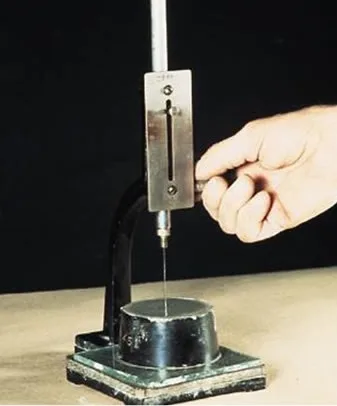
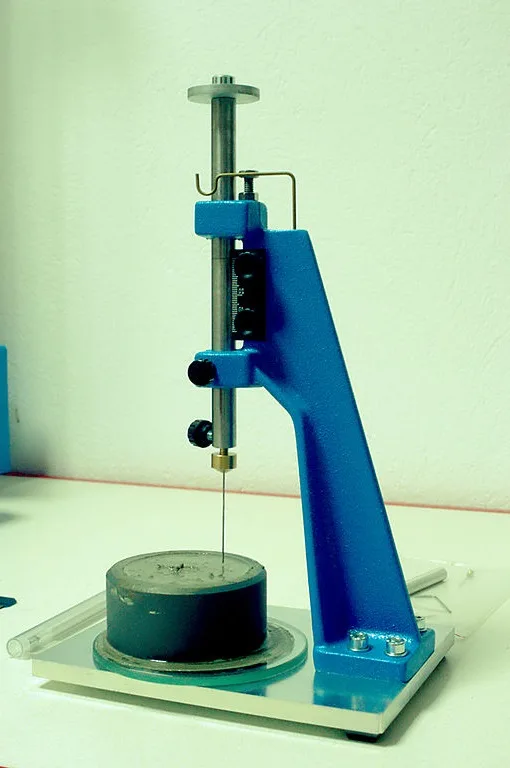
Needle: 1 mm square needle, and needle with a 5 mm annular attachment, to find out the Initial and Final setting time respectively.

Vicat apparatus: it consists of arrangement to hold the plunger and needle, which are made to fall freely.
StopWatch: To calculate Time

Mould: For cement Paste.
Weigh scale: To measure sample weights.

Test Procedure
Initial Setting Time
- Check the conditions in the lab: Lab temperature should be around 27 degrees Celsius. Humidity should be around 65%.
- Take 400 grams of cement. Add water to it. Measure the quantity of water added.
- Mix cement and water properly for 3 – 5 minutes. Make a good paste. The water added should be 0.85P, where P is the % of water required to achieve standard consistency of cement.
- Note the time when water is added to the cement.
- Fill the Vicat Mould with Paste. Fill it to the edge. Smoothen the top surface of the paste.
- Remove air content in the mould with mild shakes.
- Immediately place the mould on the Vicat apparatus base. The base should be smooth.
- Lower the 1 mm needle to touch the top of the paste and release it quickly.
- Let the Needle go deep in the cement paste.
- Note the reading of the depth by the needle.
- It should be 35 mm from the top. This means depth from the bottom should be 5 mm, as mould is of 40 mm depth.
- If the needle goes deeper, repeat the needle test on the same paste until the desired result is achieved.
- Note down the final time when the desired result is achieved.
- This Time is Initial Setting Time.
Final Setting time
- After the initial setting time procedure, Remove the 1 mm needle and attach the needle with the 5 mm annular attachment.
- Lower the needle gently to touch the top of the paste.
- If the needle makes a mark but the annular attachment doesn’t, then Cement is set.
- If the attachment also makes a mark, repeat the test until the result is achieved.
- Note down the final time when the desired result is achieved.
- This Time is Final Setting Time.