What is Heat of Hydration of Cement
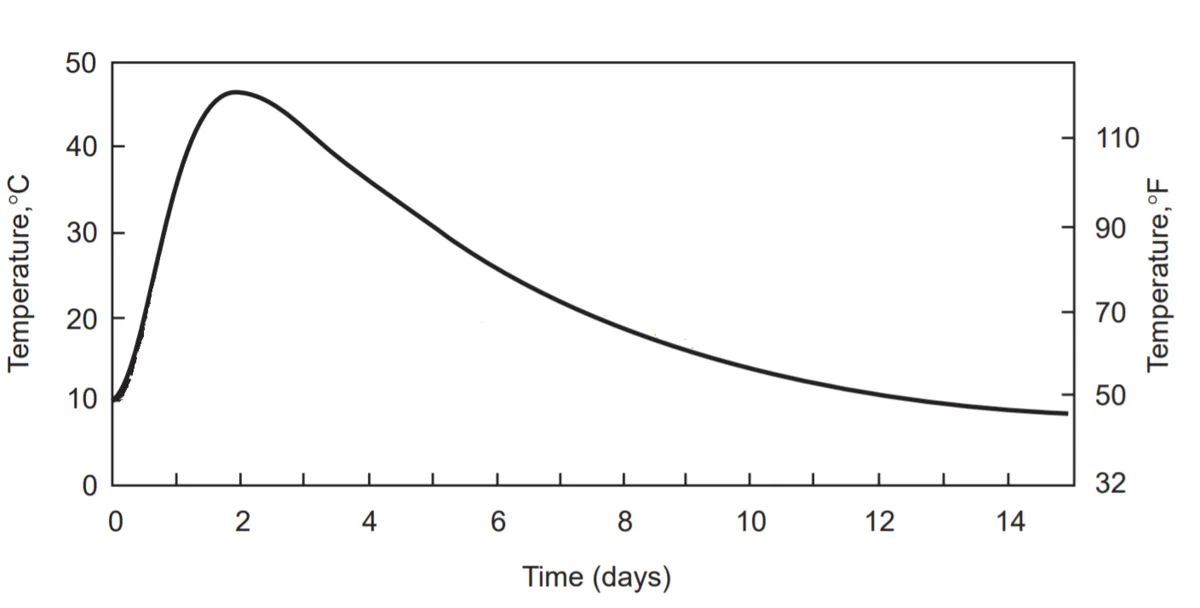
When Portland cement is mixed with water, heat is liberated. This heat is called the heat of hydration, the result of the exothermic chemical reaction between cement and water.

Significance
The heat generated by the cement’s hydration raises the temperature of concrete. These temperature rises cause expansion while the concrete is hardening. If the temperature rise is significantly high and the concrete undergoes nonuniform or rapid cooling, stresses due to thermal contraction in conjunction with structural restraint can result in cracking before or after the concrete eventually cools to the surrounding temperature. This is why hydration process of cement is important to know.
Factors Affecting Heat of Hydration
Cements with higher contents of tricalcium silicate and tricalcium aluminate, as well as a higher fineness, have higher rates of heat generation than other cements.
Tricalcium silicate and tricalcium aluminate chemically generate more heat.
Higher fineness provides a greater surface area to be wetted, resulting in an acceleration of the reaction between cement and water. This causes an increase in the rate of heat liberation at early ages.
Other factors influencing heat development in concrete include the cement content, water-cement ratio, placing and curing temperature, the presence of mineral and chemical admixtures, and the dimensions of the structural element.
Procedure
- Mix water in cement well.
- Record temperature at fixed time intervals.
- You will find a time vs temperature chart like the one shown in the diagram below.