
Objective and Significance
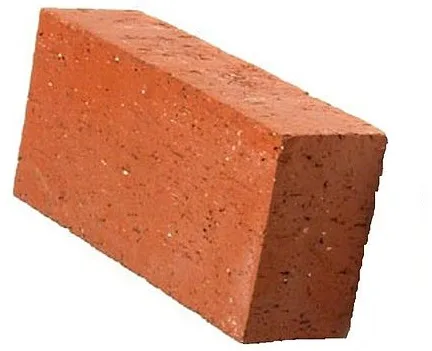
This test is used to determine the compressive strength of red/clay bricks. Red Bricks are generally used for masonry work. It needs to possess the desired compressive strength, as sometimes the load is directly transferred to the masonry. In the case of a load-bearing structure, brick masonry is used as the load-carrying structure.

Aim
To determine Compressive strength of Red/Clay Bricks.
Apparatus
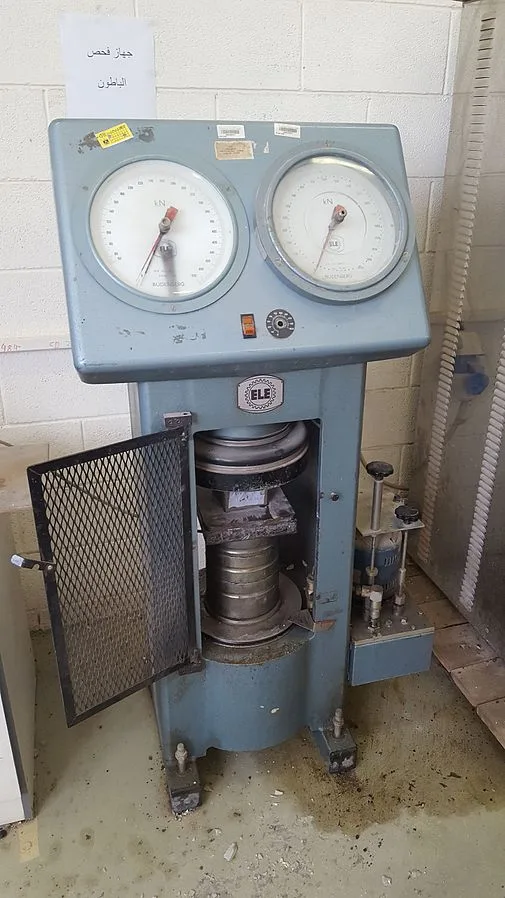
Compression testing machine (CTM): The testing machine may be of any reliable type, of sufficient capacity for the tests and capable of applying the load at the specified rate. The permissible error shall be not greater than ± 2 percent of the maximum load.
Sampling of Bricks
Selection of Specimen: Select sample bricks randomly from the lot. Cover all types of bricks, from different color, range, texture and size.
Number of Specimens: Select at least 5 bricks from a lot of 2,001–10,000 bricks, 10 bricks from a lot of 10,001–35,000 bricks and 15 bricks from a lot of 35,001–50,000 bricks.
Procedure
- Place the specimen with flat faces horizontal and mortar filled face facing upwards between plates of the testing machine.
- Apply load axially at a uniform rate of 14 N/mm2 (140 kgf/cm2) per minute till failure occurs and note maximum load at failure.
- The load at failure is maximum load at which the specimen fails to produce any further increase in the indicator reading on the testing machine.
Calculations
Compressive strength (N/mm²) = Maximum load at failure (N) ÷ Average area of the bed faces (mm²)The compressive strength of first class bricks should not be less than 10.5 N/mm2.