
Compaction factor test is also useful to find out the workability of the fresh concrete. Compaction factor test is a more precise way to analyze workability of the concrete. The compacting factor test is designed primarily for use in the laboratory but it can also be used in the field. It is particularly useful for concrete mixes of very low workability and normally used when concrete is to be compacted by vibration.
Significance of the Compaction Factor Test
- It is a more accurate way to calculate workability of concrete.
- It is more precise than slump cone test
- Workability can be found out in very low workable concrete

Mix design and curing in one app
Concrete Calculator All in One: concrete volume and cost for every shape, an IS and ACI mix design library and a curing tracker.
Try the app
Apparatus
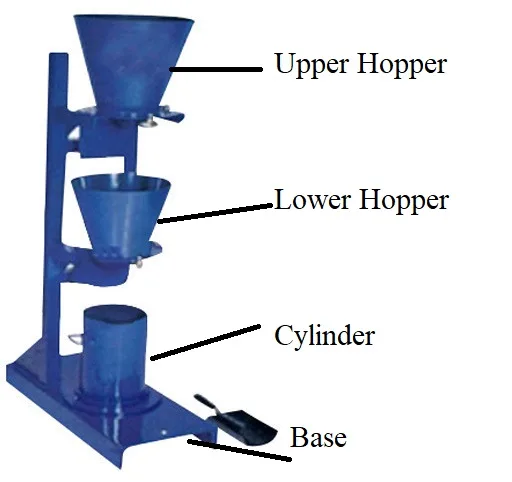
Compaction Factor Machine
Weigh Machine

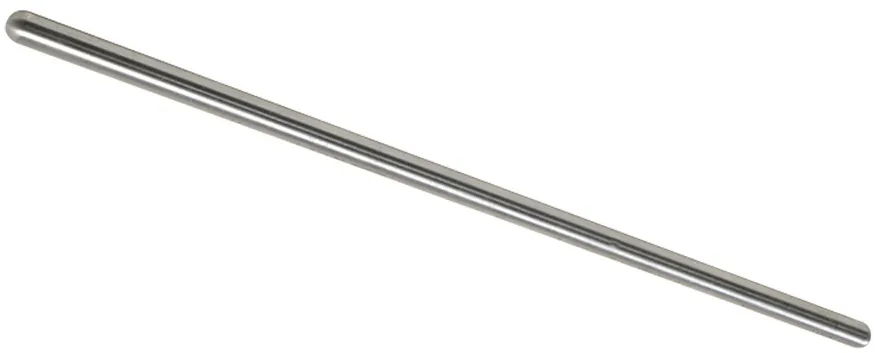
Compaction Rod
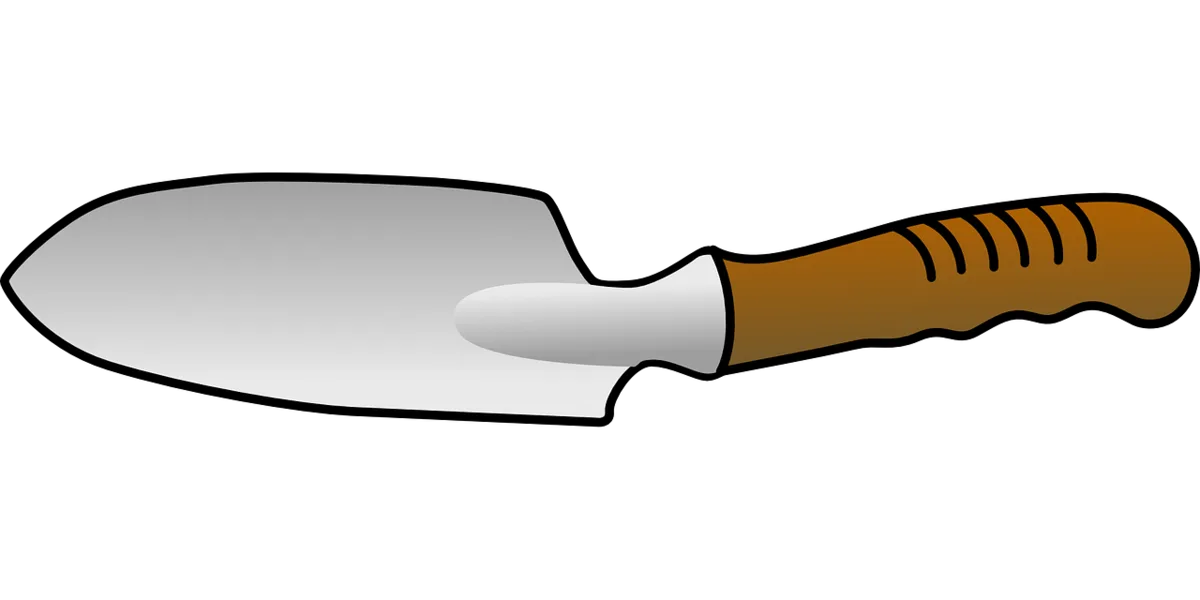
Trowel
Machine Vibrator: To provide sufficient vibrations to concrete
Procedure
- The sample of concrete to be tested shall be placed gently in the upper hopper, using the hand scoop. The hopper shall be filled level with its brim and the trap-door shall be opened so that the concrete falls into the lower hopper.
- Certain mixes have a tendency to stick in one or both of the hoppers. If this occurs, the concrete may be helped through by pushing the rod gently into the concrete from the top. During this process, the cylinder shall be covered by the trowels.
- Immediately after the concrete has come to rest, the cylinder shall be uncovered, the trap-door of the lower hopper opened, and the concrete allowed to fall into the cylinder. The excess of concrete remaining above the level of the top of the cylinder shall then be cut off by holding a trowel in each hand, with the plane of the blades horizontal, and moving them simultaneously one from each side across the top of the cylinder, at the same time keeping them pressed on the top edge of the cylinder.
- The outside of the cylinder shall then be wiped clean. The above operation shall be carried out at a place free from vibration or shock. The weight of the concrete in the cylinder shall then be determined to the nearest 10 g. This weight shall be known as the weight of partially compacted concrete.
- The cylinder shall be refilled with concrete from the same sample in layers approximately 5 cm deep, the layers being heavily rammed or preferably vibrated so as to obtain full compaction.
- The top surface of the fully compacted concrete shall be carefully struck off level with the top of the cylinder. The outside of the cylinder shall then be wiped clean and the weight of the fully compacted concrete determined to the nearest 10 g.
Calculations
| Sr. No. | Description | Sample 1 | Sample 2 | Sample 3 |
|---|---|---|---|---|
| 1 | Weight of Empty Cylinder (W1) | |||
| 2 | Weight of Empty Cylinder + Free Fall Concrete(W2) | |||
| 3 | Weight of Empty Cylinder + Fully Compacted Concrete (W3) | |||
| 4 | Weight of Partially Compacted Concrete(WP = W2 – W1) | |||
| 5 | Weight of Fully Compacted Concrete(WF = W3 – W1) | |||
| 6 | Compaction Factor = WP/ WF |
| Workability | Compaction Factor | Slump (mm) |
|---|---|---|
| Very Low | 0.78 | 0 – 25 |
| Low | 0.85 | 25 – 50 |
| Medium | 0.92 | 50 – 100 |
| High | 0.95 | 100 – 175 |